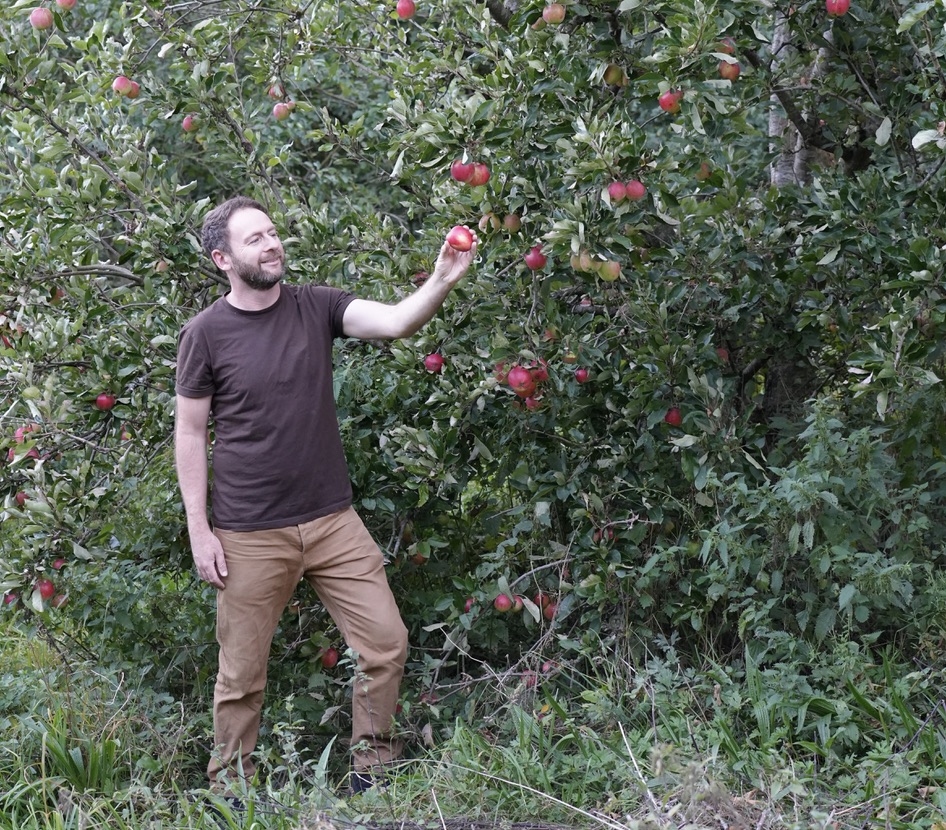
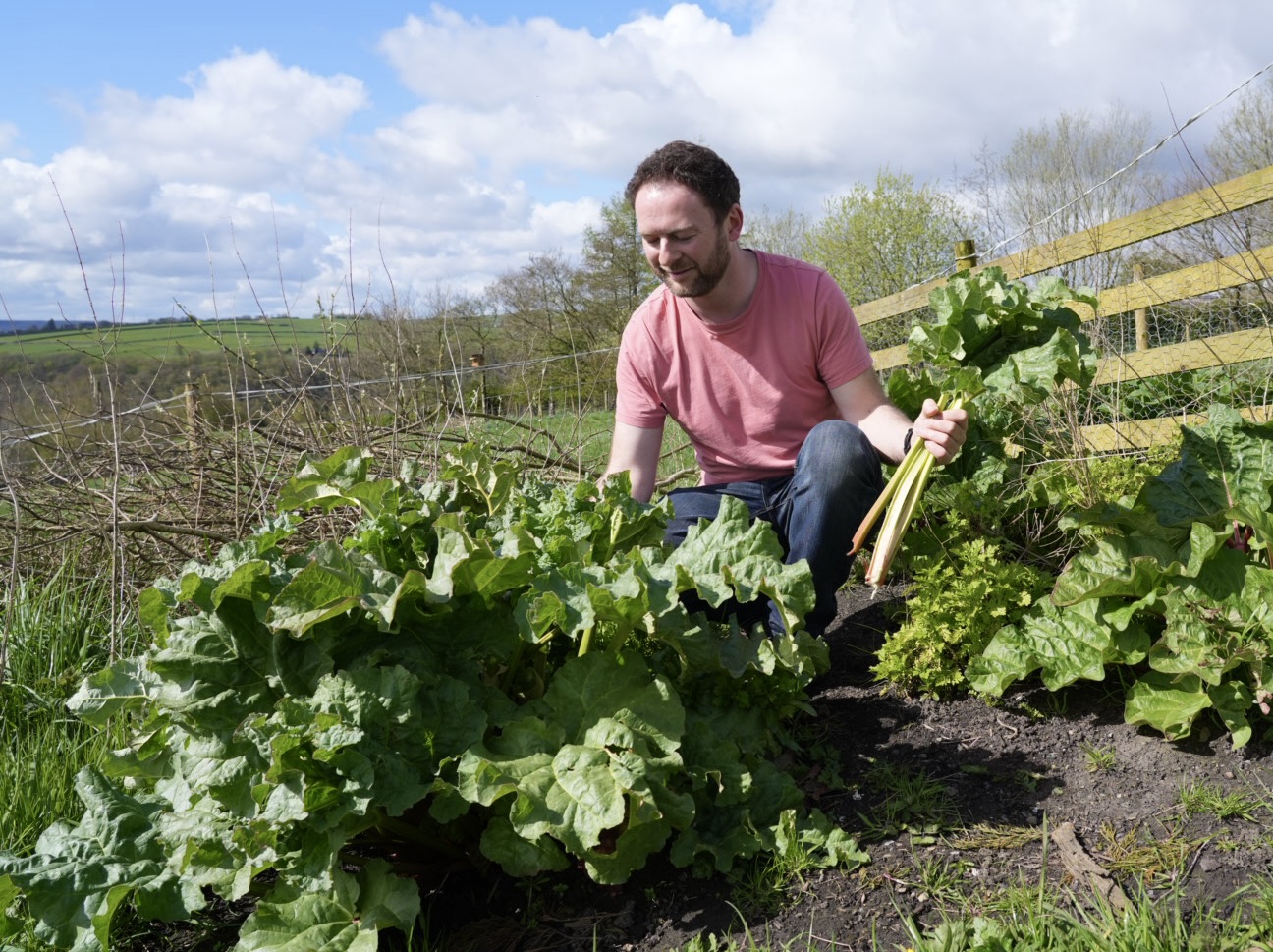
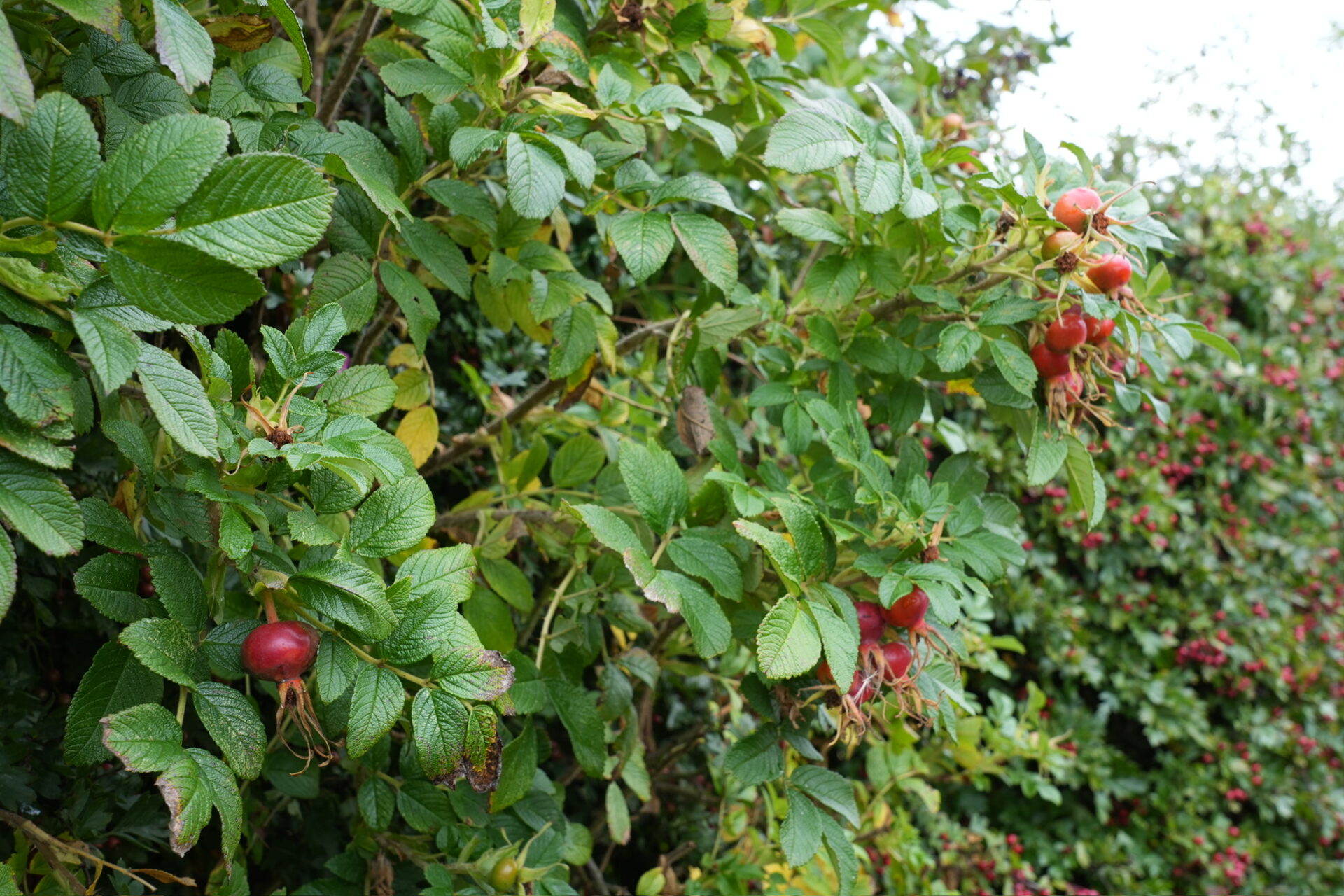
The phrase plant community comes from ecology, the scientific study of nature. It describes the plant part of an ecosystem where different plant species grow side by side in an ecosystem.
An edible plant community is when we apply the idea of wild plant communities to a group of edible plants in gardens, community gardens, parks, allotments and on farms. They can be large scale, replicating woodland, called a food forest garden, or they can be small, drawing inspiration from verges and other herbaceous plant groups.
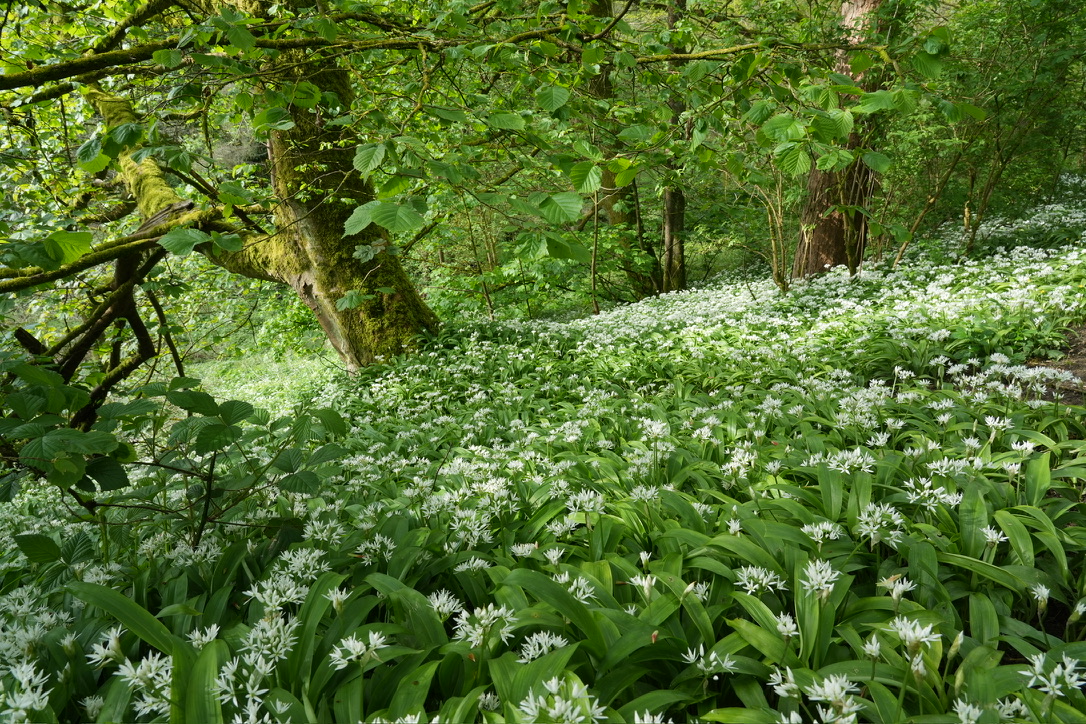
Edible plant communities do occur naturally in the wild, when a bunch of edible plants happen to grow next to each other, such as the wildflower Jack-by-the-hedge (Alliaria petiolata), growing among wild garlic (Allium ursinum) growing beneath hazel trees in woodland.
In gardens and on farms we can take edible plant communities a step further by deliberately using only edible crops and a wider mix. At the heart of this food growing approach are edible perennials and one of the big benefits of a well planned edible plant community is that they can and usually require less input from us than rows of annual crops (though they’re still important too!)
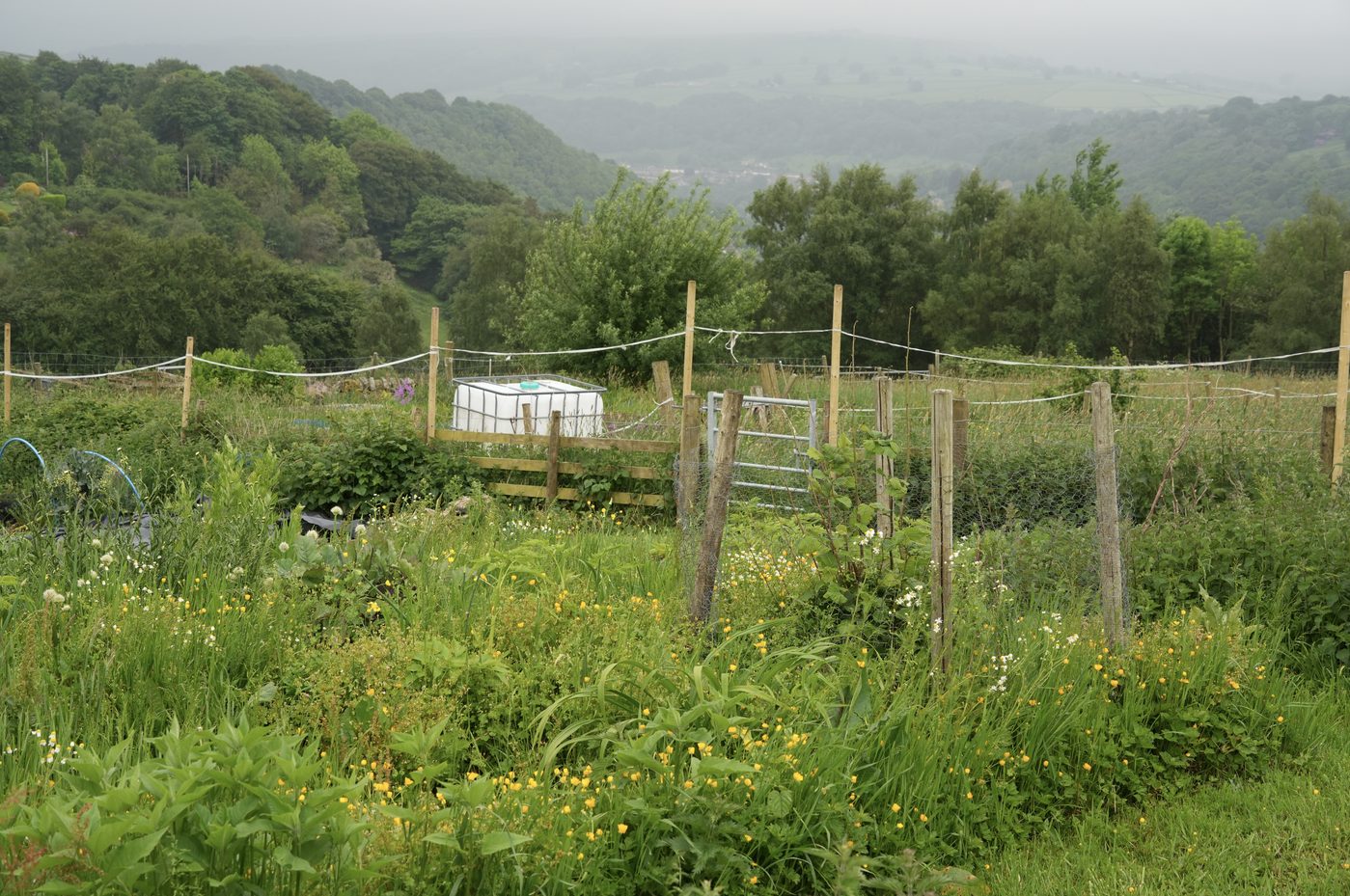
Another exciting thing about edible plant communities is that they change over the year, delivering a succession of crops in the same spot. And even more exciting, they change over time too because we allow the plants to grow, spread and jostle how they want. Hopefully eventually settling into a happy equilibrium – even becoming something better than we planned!
Above is a medium size savoury perennial edible plant community in spring of its second year since planting. Already there is more food here in the foliage than we could eat. Notice also there are inedible creeping buttercup, I did not weed these out – in fact I did no weeding or watering at all for this area, except to pull out nettle stems to weaken them.
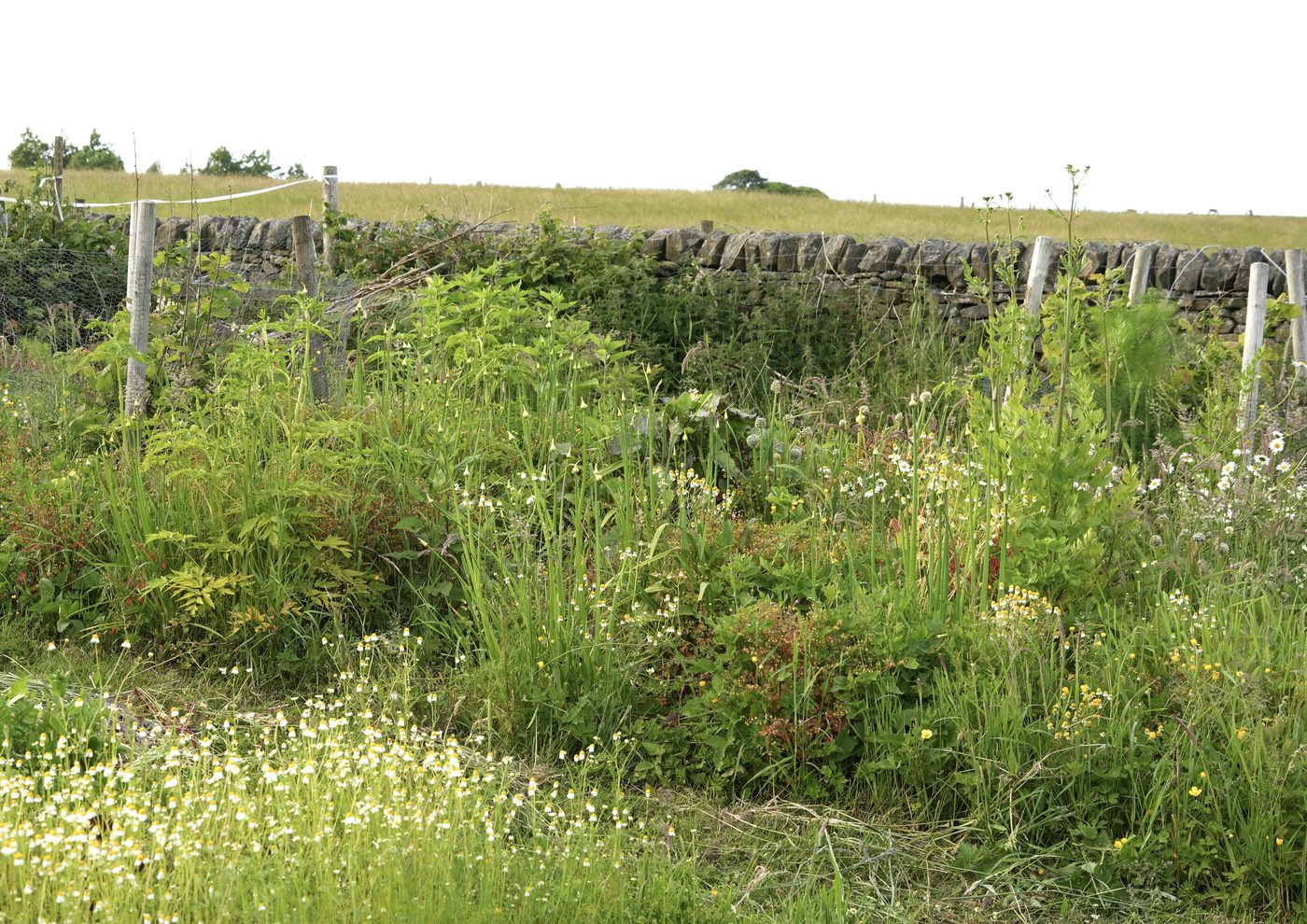
By early summer the perennial edibles have almost full outcompeted the buttercups themselves and new crops are pushing through for us to eat including many edible flowers. This is great for only the second growing season as the perennials will become larger and more robust.
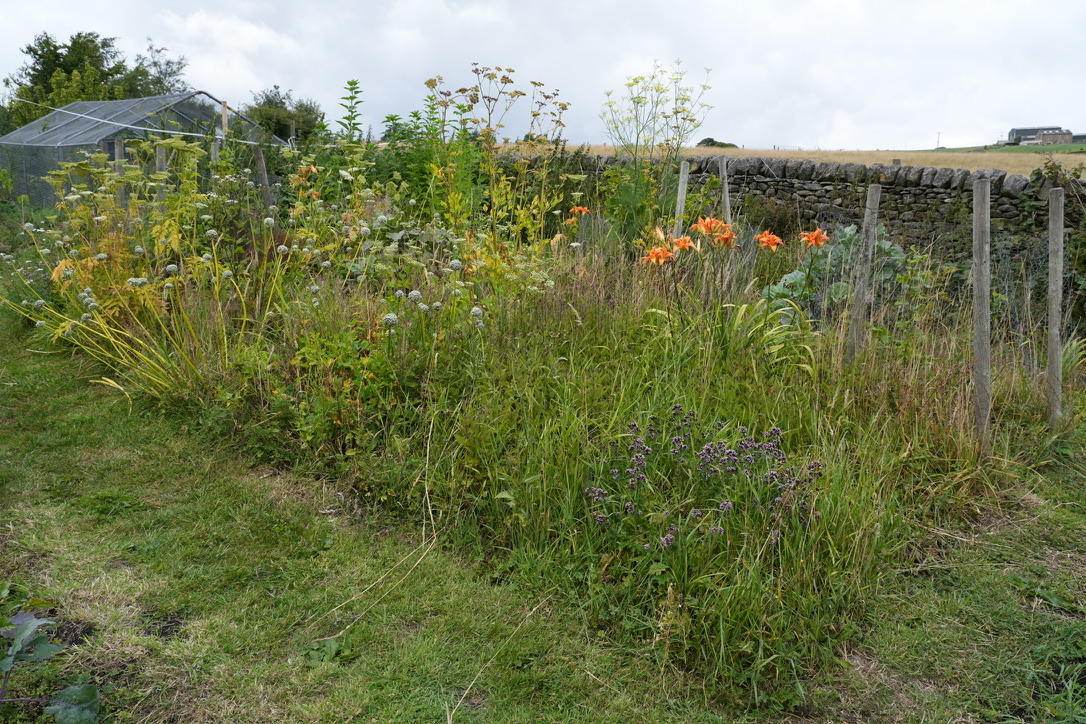
Heading into late-summer, many flower stems are finishing and by cutting these down to the base, a fresh and rich crop of foliage emerges. It looks tired because it has weathered the hot dry summer of 2026 but everything is still alive, happy and there is food to pick! There are other new crops growing naturally such as hazel nuts and Chinese artichokes, because we have a succession of food throughout the season with virtually no input from us at all.
The incredible thing I observed about this plant community is that in only one year since planting, it was by far our most popular area in the garden for pollinators and other wildlife. Of course, because we don’t dig – apart from the small patches of sunchokes and Chinese artichoke tubers – the soil is largely undisturbed allowing soil life to live happily, such as protozoa, fungi, beetles, nesting wasps and bees.
Over time the root dieback and leaf fall will enrich the soil turning the space into a naturally regenerating and self-sufficient plant community, as happens in the wild.
I’m so excited about this approach to growing food and how it has made my life easier in the garden while providing delicious crops for us and a stable habitat for wildlife, that I’ve written a book called Grower Gatherer about the plants we use alongside a few simple planting plans that you can recreate in small gardens or larger areas.
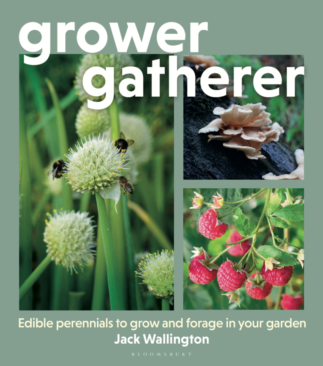
Explore edible perennials and forage gardens in Grower Gatherer
Discover a curated selection of delicious, easy to grow perennial vegetables, fruit, herbs, nuts, fungi and edible flowers – and how to combine them into beautiful, productive plant communities.