Forest garden and food forest generally mean the same thing, an area of garden or farm that consists of crops grown among trees in a way that mimics natural woodland or forest. I’m yet to see a forest garden that is actually forest, because they are more on a scale of smaller woodland, so technically they should really be called food woodland gardens. Whatever we call them, a forest garden is essentially a large planned edible plant community.
At the heart of forest gardens are edible perennial crops, the food producing plants that live and crop from year-to-year. Their perennial nature makes a forest garden permanent and stable, potentially surviving for decades.
How to plan food forest layers
A key aspect of forest gardens is layering and seasonality. Layering is when we think about the garden in rough vertical layers, illustrated below…
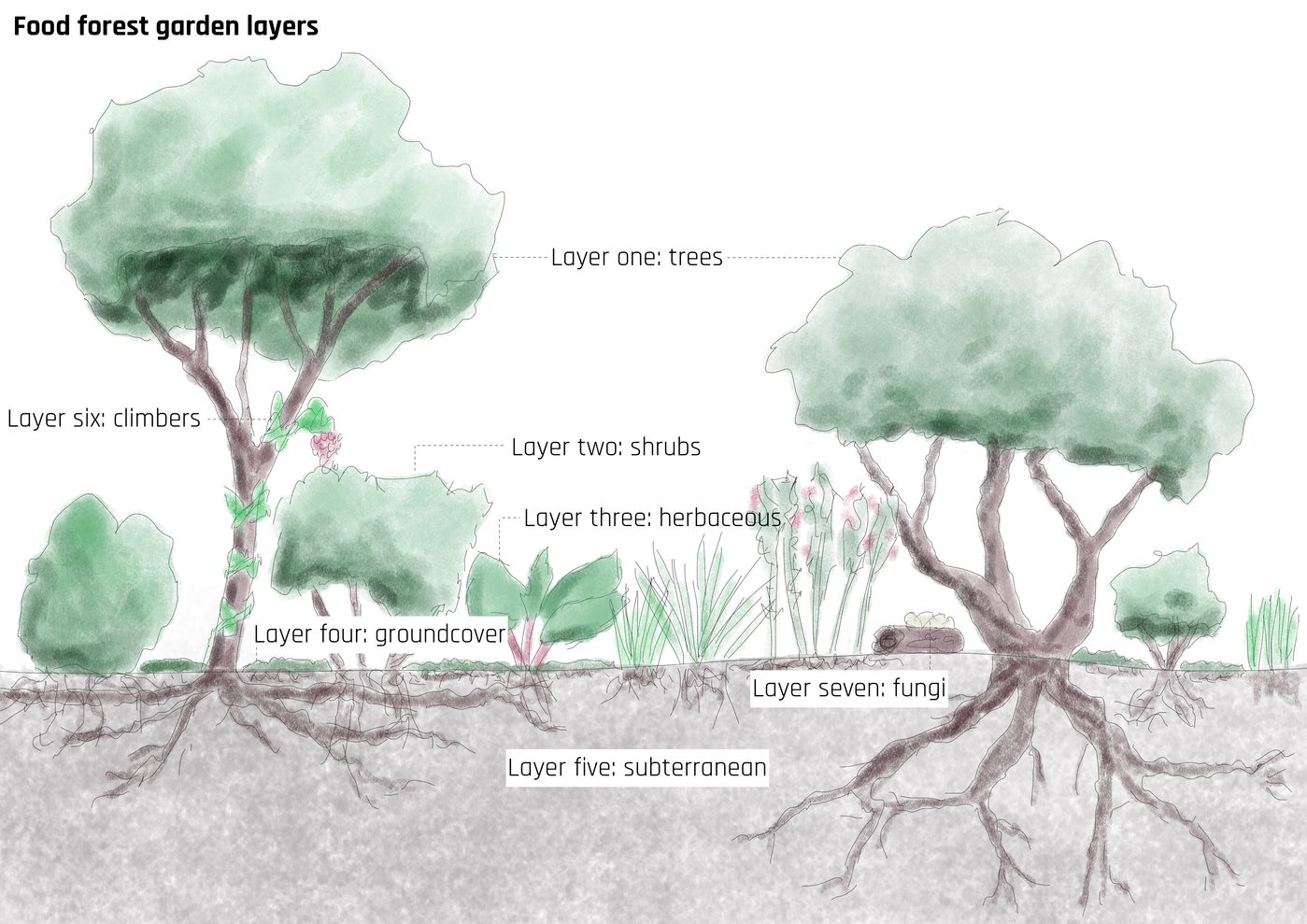
Layer one – trees: when planning a forest garden, I would typically start by placing the larger trees and work my way down from there. Most edible trees produce fruit or nuts, everything else in planted below or around these. Large gardens, allotments, community gardens, parks and farms could start with very large nut trees like walnut, sweet chestnut and monkey puzzle or fruiting mulberry. However, most regular gardens will need something smaller, so I would plant hazelnut and pollard or coppice it, as well as fruit trees on a semi-dwarfing rootstock to limit their height to 2 – 3m maximum. Fruit such as pears, apples and figs are perfect for forest gardens. Another reason I don’t like the term forest garden myself is because it’s often better to space the trees out more than you would see in a forest of woodland, instead it’s more akin to the structure of wood pasture habitat, with wide expanses between for more light to reach lower plants.
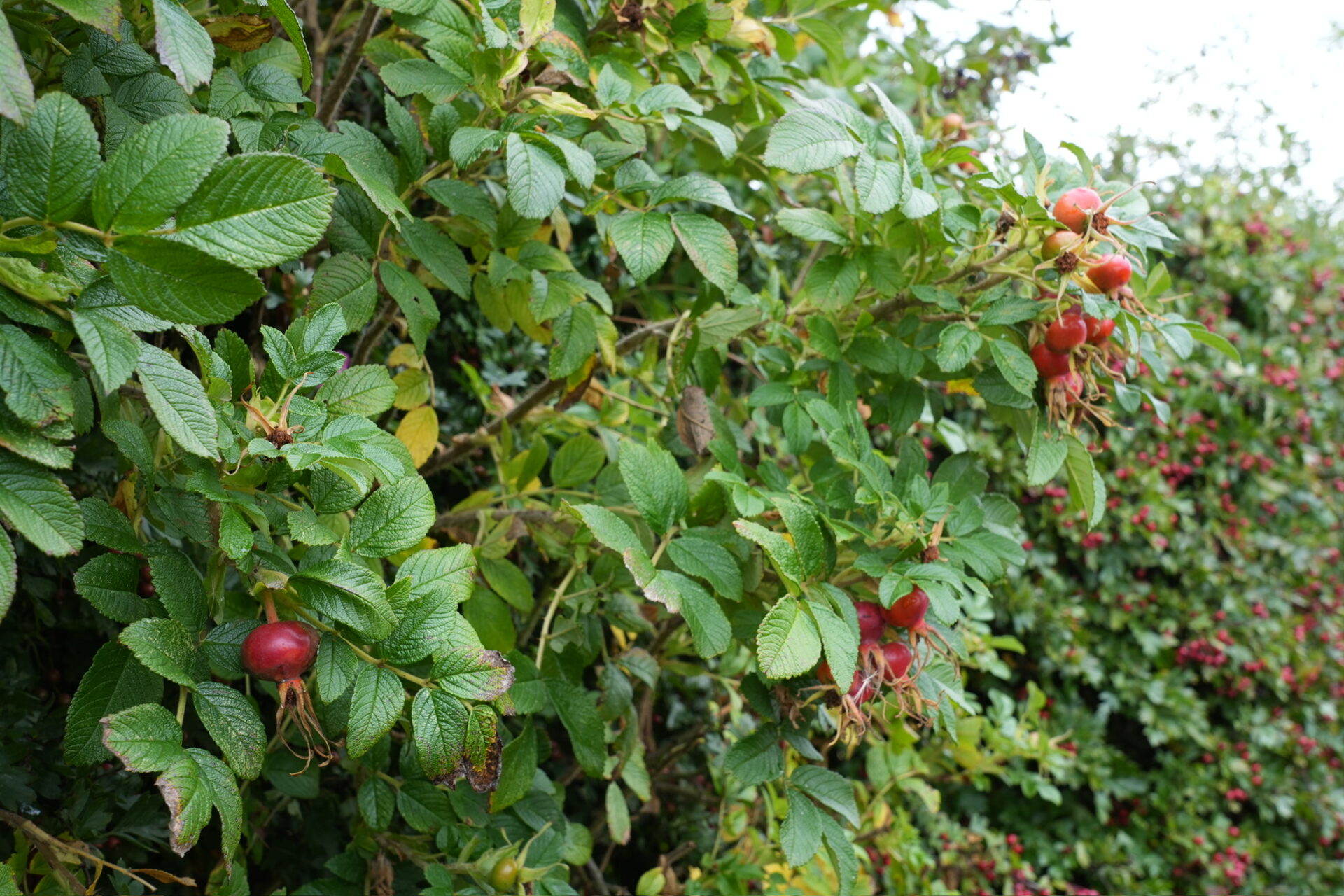
Layer two – shrubs: around and under the trees I then plant shrubby plants and cane producing fruits. Plants like redcurrants, blackcurrants, gooseberry, raspberry, honeyberry – there are lots to consider. Most of these are at least tolerant of a little dappled shade, though fruit best in full sun. Space them all out appropriately, thinking about how sunlight will fall through the year to not shade things out, and allow plenty of room for herbaceous edible perennials.
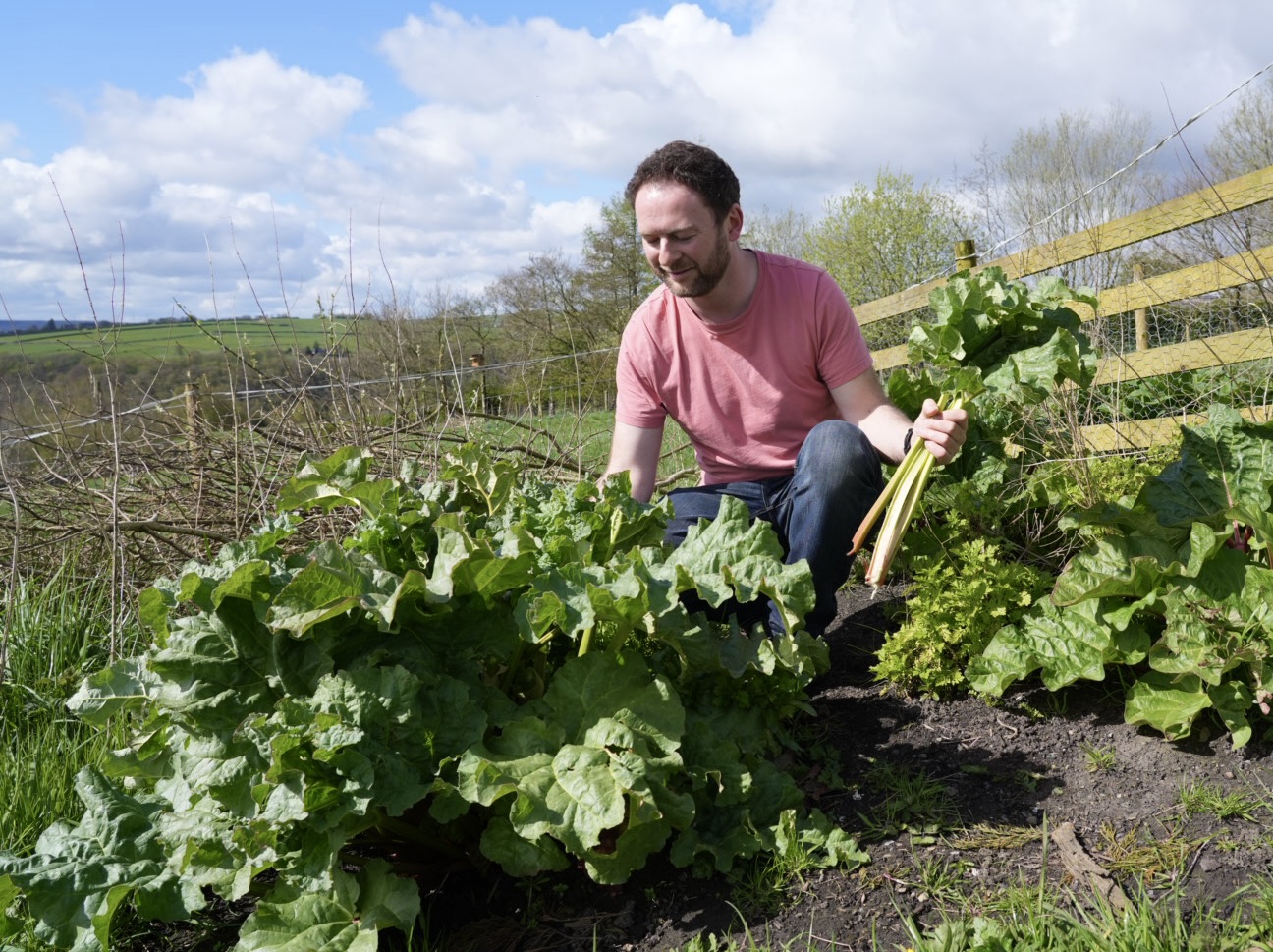
Layer three – herbaceous: this layer includes herbaceous edible perennials like rhubarb, Welsh onion, daylily and perennial kale. I would also include any self-seeding annuals that act like perennials by coming back naturally themselves, such as chamomile and nasturtium.
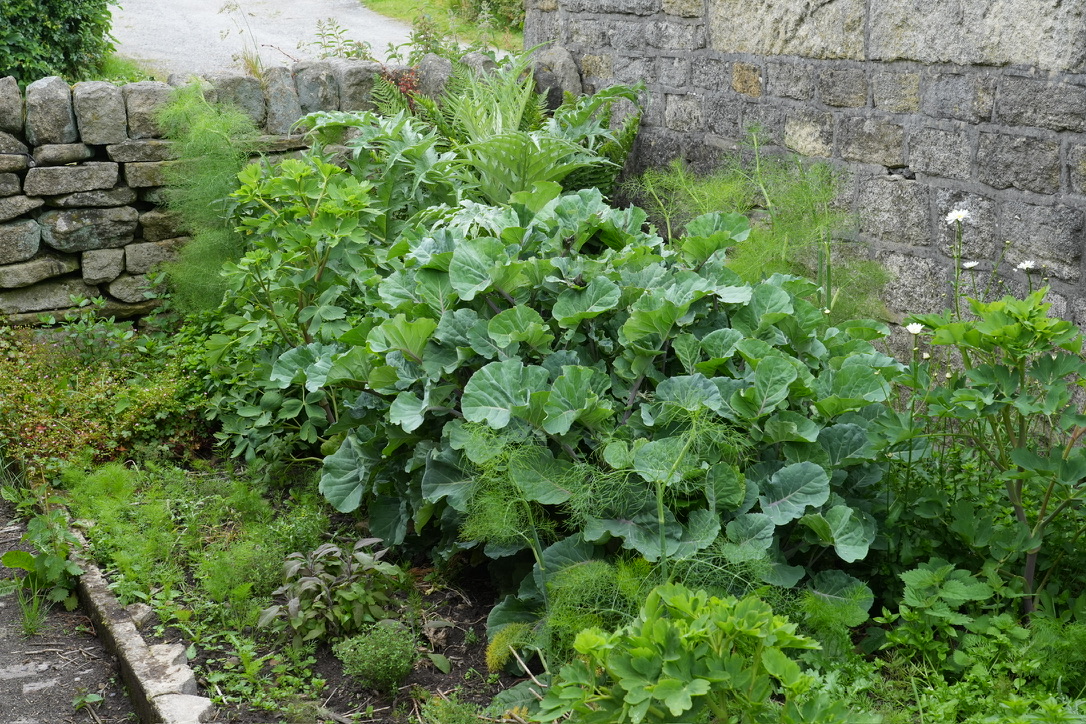
Layer four – groundcover: all of the layers are important but I’d argue groundcover is easily one of the most essential. By adding spreading edible groundcover, you will help prevent other unwanted plants from self-sowing into your forest garden, reducing maintenance. Groundcovers like oregano and sweet violet will form tight evergreen mats that retain moisture and reduce unwanted seed germination. Many herbaceous perennials and shrubs in previous layers will of course also act like large groundcovers by protecting soil. Specific low spreading groundcovers are good to fill any remaining gaps, and provide food in their own right.
Layer five – subterranean: some edible perennials grow underground, such as sunchokes, Chinese artichokes and dahlia tubers. These need digging up, which is worth planning for. It’s also worth considering the root systems of all plants. Root structure is a big subject with some edible perennials forming deep taproots and others a fine network of thin roots. Overtime you’ll learn as you grow and plant each crop. My general rule of thumb is that a plant’s root system will be approximately the size and mass of their aboveground parts. It’s not always exactly like that, but it’s a good approximation. This allows you to plan a food forest with tubers to dig up and eat, planted away from the roots of more permanent crops that you don’t, to avoid disturbing them. Also to plan how different roots can live alongside one another happily, e.g. shallow fine root formers and deep tap rooters use different levels of the soil and can grow more closely.
Layer six – climbers: this could be labelled any number layer really but I come to it toward the end once everything else is planned. I like to grow climbers up larger trees and shrubs, this allows you to double the productivity of a space. Food producing climbers include grapes and kiwi.
Layer seven – fungi: again, this is a layer around all plants. It’s worth considering edible fungi in your plan as some will grow on your trees and shrubs eventually, others will take up home in your food forests leaf litter in time. Some grow on piles of dead wood.
I’ve discussed all of my favourite plants and fungi to use in food forests in my book Grower Gatherer, if you’d like to learn much more. Otherwise, you can give it a go by deciding where to plant your food trees and work your way down from there.
Seasonal succession

One of the wonderful things about an edible plant community, including food forest gardens, is that they can produce food across the year. Food you can forage with the seasons. I like it because it connects me to the time of year and also offers variety in what we eat across the months.
For instance, in spring a forest garden might have a carpet of wild garlic to use in salads, flavouring dishes and for pesto. In late-spring through early-summer enjoy lots of fresh leaves for salads. Then in late-summer to autumn many of the fruits and nuts will be ready to gather. Our sweet chestnuts tend to ripen in October.
Wildlife supporting habitat
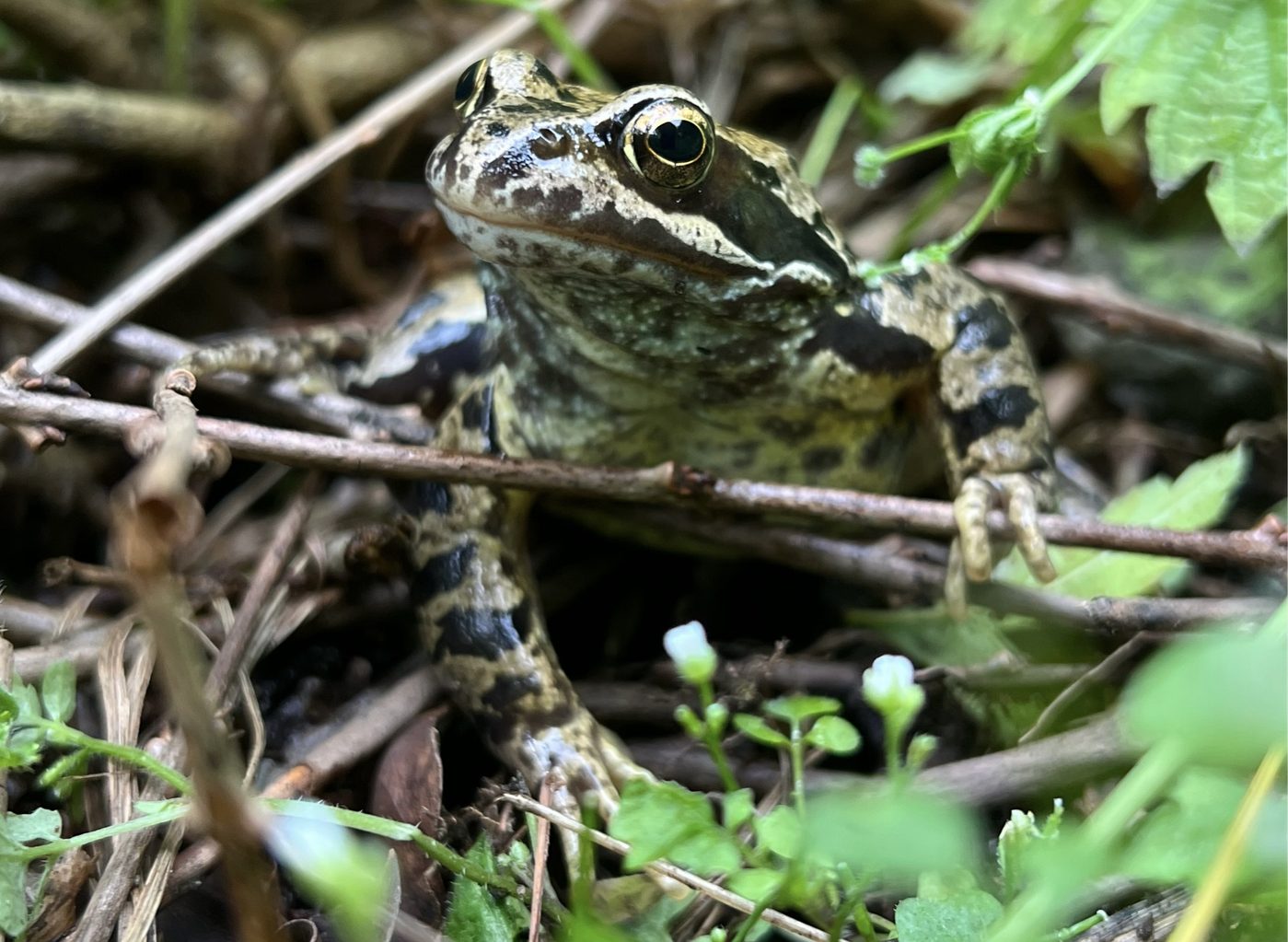
A permanent plant community like a forest garden provides stable habitat for much wildlife. Leaves can be eaten and sheltered in, branches for nesting. Flowers provide nectar and pollen while fruit is food for wildlife as well as us. Leaf fall left on the ground is habitat for frogs, toads, beetles, other insects, slugs and snails. Birds will rummage in this to eat the insects, molluscs and worms, as will hedgehogs.
As the plant community lives and grows every year, wildlife grow accustomed to it and by growing food for yourself, you also grow a reliable home for wildlife.
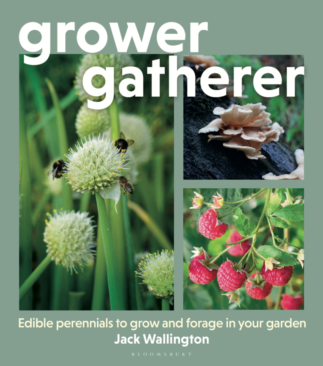
Explore edible perennials and forage gardens in Grower Gatherer
Discover a curated selection of delicious, easy to grow perennial vegetables, fruit, herbs, nuts, fungi and edible flowers – and how to combine them into beautiful, productive plant communities.