The UK horticulture industry’s growth is currently being harmed by the Labour Government’s inaction in implementing the heavily supported peat compost ban (view and sign the latest petition here). This ban has been 26 years in the making, or longer. While the Labour Government recently committed to the ban, they also said “when time allows”. Without a concrete timeline it leaves growers and consumers confused while harming the very businesses that voluntarily made the switch. Not to mention continues to harm this important and globally rare wildlife habitat while releasing carbon locked in 6,000 – 10,000 years of peat into the atmosphere.
The timeline so far…
- 1980s: peat compost flagged from within the horticulture industry as harmful on programmes like Gardeners’ World by ecologists and presenter Geoff Hamilton.
- 2011: UK Government set a voluntary target for the industry to end the use of peat by 2020.
- 2020: the target was completely missed, the transition to peat free had hardly happened, as many had flagged to the Government for years ahead of this voluntary deadline. Demonstrating that voluntary industrial action did not work.
- August 2022: Government announced a commitment to ban the retail of horticultural peat in England and Wales by the end of 2024. This has been missed.
- March 2023: Government U-turned because of peat lobbyists to say a professional ban (in growing plants for sale or for food) wouldn’t be until 2030!
- 2024: the previously announced retail ban was not implemented when the new Labour Government took over from the Conservatives and then did nothing to pick it up, despite a manifesto promise. This has cost wildlife in continued damage to habitat, another year of carbon emissions and another year of industry instability and uncertainty. The Conservatives were about to implement the ban but ran out of time, and since then, the Labour Government hasn’t even discussed the timeline in parliament.
- November 2024: MP Sarah Dyke has picked it up herself, introducing a private member’s bill, the Horticultural Peat (Prohibition of Sale) Bill, calling for a ban on sales by the end of 2025. This was brought to parliament twice in 2025 but the sessions ran out of time before it could be discussed. It is due to be tabled again soon in 2026.
The proposal…
- 2026: legally ban the sale of horticultural peat and a number of professional uses of it.
- 2030: ban all remaining uses of peat in the horticulture sector.
What has the sector done?
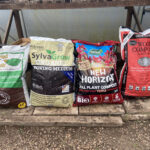
Against all odds with successive Governments being slow on this issue, the horticulture industry had in recent years admirably risen to the challenge. The ban is supported near universally, many leading nurseries and businesses have switched to peat free compost. There are now thousands of businesses who are peat free including the likes of RHS, Kew, National Trust, B&Q, Co-op, Sarah Raven, Claire Austin, Beth Chattos, Bluebell Nursery and many, many more. Most good shops now only sell bags of peat free compost and shops are switching rapidly to plants only grown in peat free. It has been an amazing and heartwarming campaign from across the industry. Peat free compost sales have grown dramatically as a result in recent years from this voluntary action. But the Labour Government is now letting everyone down.
The challenges
Without a peat compost ban, this Herculean effort can easily be reversed by bad players making money out of peat who don’t want the ban to happen. Peat free compost can be undercut by peat, significantly harming the companies that have been switching to sustainable models. Misinformation about the quality of peat-free compost continues to circulate from these vested interests despite all leading gardeners and nurseries having grown peat-free now for decades.
Why is peat so bad?
It takes a year for 1mm of peat to form. 6 metres of peat took 6,000 years to form. It is not sustainable by any measure of the word. While peat bogs can be restored, that growth is such a long process it is a joke to even think it can be sustainable.
Peat is formed in rare waterlogged locations – upland blanket bogs and lowland raised bogs – that trap plant matter underwater where it can’t fully decompose. This locks the carbon absorbed by the plants into the peat, keeping it out of the atmosphere, reducing global warming. Draining bogs and digging the peat up has been long understood to release millennia of locked carbon into the atmosphere rapidly.
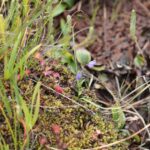
Worse, it is dug directly out of wildlife habitat vital for sustaining various owls, other birds of prey, ground nesting birds such as the curlew and lapwing, British carnivorous plants, a multitude of mosses and many other animals and plants.
What’s the alternative?
3% of land around the world is peatland. Plants growing in 97% of the world’s soils do not grow in peat – they don’t need peat. As hundreds of thousands of gardeners and businesses have now proven, peat is not needed for growing.
Peat-free composts are made of decomposed plant matter in the same way as homemade compost. Most popular peat free formulas are made form decomposed waste plant matter such as composted bark. Much of this waste comes from agricultural and forestry waste, i.e. byproducts of wood and crops.
There is much misinformation about peat free compost. For instance, coir – the husks of coconut, a waste product – isn’t used as much as people think. Community waste isn’t used as much as people think. Checking for plastic and contaminants is much more advanced than people realise. Peat compost isn’t naturally better, it is by its nature an nutrient poor growing media with fertilisers added to it in a similar way to peat free.
Today we are lucky that there are a large number of good quality peat free composts available across the UK.
Why is it proving so hard for the legislation to be implemented?
Governments don’t think the horticulture sector matters. It is that simple. They aren’t prioritising the ban over other legislation because they aren’t prioritising horticulture. In addition, Labour hadn’t done its homework. They listened to peat lobbyists – organisations funded by peat sales – who went in heavy at the start of their term rather than doing proper research to see what the wider sector really thinks.
Legislation should not be this hard. When an entire industry has voluntarily agreed to and asked for legislation for almost three decades and it doesn’t happen, something is very wrong in our political system. No wonder people think politicians don’t do anything.
The peat ban legislation would be the quickest, easiest win for the Labour Government. It is extremely well supported, most of the hard work has already been done by the industry. It’s right there on the table for them.
What’s next?
Three things to watch out for:
- MP Sarah Dyke’s peat ban bill being read in parliament – email your MP asking to support and prioritise this.
- King’s Speech 2026 – all eyes are on this for Labour to include the ban in this.
- Peat Free Partnership petition – in the space of weeks a new petition has soared past 6,000 people, sign this and share it.
Personally I am optimistic that Labour will uphold their promise and put this legislation into action in 2026. Goodness knows it’s been a long time coming. If anything it will give garden writers a break having to put “peat-free” as a clarification in front of every single mention of compost.
I’ve been championing peat-free compost for over a decade now. Back in 2014 I was using peat-free compost and explaining to people how good it was, expecting a ban within a year or two given the level or support. Yet here we are in 2026 and I really cannot believe it.